
For many citizens, a routine trip to the bank or a mobile franchise can turn into a source of immense stress. The culprit? Faded fingerprints. Whether due to aging, medical conditions, or years of manual labor, the ridges on our fingertips can wear down over time. When this happens, biometric verification machines often fail to recognize the individual, locking them out of essential services like accessing bank accounts, transferring property, or obtaining a SIM card.
While the State Bank of Pakistan and the Pakistan Telecommunication Authority have previously outlined mechanisms to help, the reality on the ground has been difficult. Substandard fingerprint readers at service points often exacerbate the problem, leaving citizens helpless.
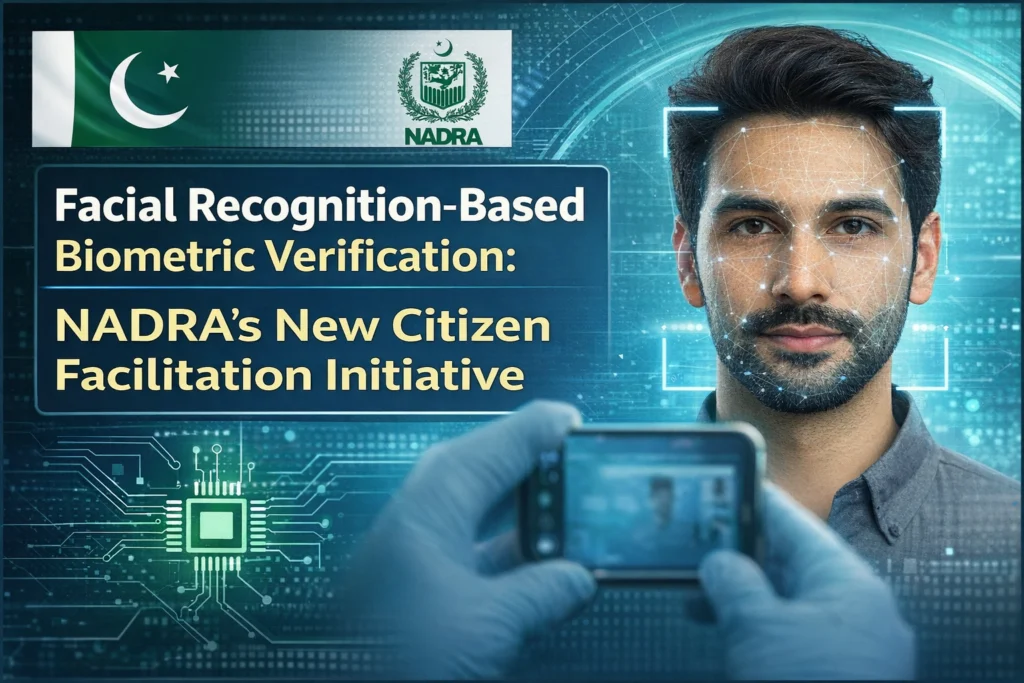
Recognizing this widespread hurdle, the National Database and Registration Authority (NADRA) has launched a groundbreaking initiative. By integrating facial recognition technology into the national verification system, NADRA aims to ensure that no citizen is denied service simply because their fingerprints have faded.
The Shift to Multi-Biometric Verification
To address the limitations of fingerprint-only verification, the Government of Pakistan has taken decisive legal steps. Following directives from the Prime Minister and the Federal Minister for Interior, the Federal Government has amended the National Identity Card Rules.
This amendment is a game-changer. It legally expands the definition of “biometrics” beyond just fingerprints. Now, facial photographs and iris scans are recognized as valid biometric identifiers. This legislative update lays the robust legal foundation required to implement a modern, multi-biometric system across the country. It means that your face is now just as powerful as your fingerprint when it comes to proving your identity.
How the Facial Recognition System Works
NADRA has utilized this new legal framework to develop a technical solution that allows for contactless verification. This isn’t just a plan for the distant future; components of it are already active.
Currently, this facial recognition-based system is available at NADRA Registration Centres and through the Pak ID mobile application. It is already facilitating specific services, such as:
- NADRA vehicle biometric verification online: For transferring vehicles registered in Islamabad.
- Online Passport Applications: Verifying identity without visiting an office.
- Proof-of-Life: Soon, federal government pensioners will be able to provide proof of existence using this system.
The scope of these digital services is expanding in phases, ensuring that technology serves the people who need it most.
The New Procedure for Failed Fingerprints
Starting from January 20, 2026, a standardized procedure will be rolled out to help citizens whose fingerprint verification fails at third-party institutions (like banks or telecom franchises).
Here is the step-by-step process for utilizing this new facility:
1. Verification Failure
If you visit a service provider (e.g., a bank) and the fingerprint scanner fails to verify your identity, you no longer need to worry. You will be directed to use the facial verification alternative.
2. Visit a NADRA Centre
You will visit the nearest NADRA Registration Centre. There, a staff member will take a fresh photograph of you.
3. Facial Matching
The system will instantly match this new photograph with the image already stored in NADRA’s existing records. This ensures high-level security and accuracy.
4. Issuance of Certificate
Upon successful matching, NADRA will issue a Facial Recognition-Based Biometric Verification Certificate. This certificate is comprehensive and includes:
- The specific purpose of the verification.
- Your recent photograph alongside the record photograph.
- Your CNIC number, name, and father’s name.
- A unique NADRA biometric verification Tracking ID online and a QR code.
The fee for this certificate is a nominal Rs 20, ensuring it remains affordable for all citizens.
5. Submission and Final Verification
This certificate is valid for seven days. You simply take this certificate back to the institution where you originally faced the issue (e.g., the bank). The institution will scan the certificate, verify it online through NADRA’s system, and proceed with your transaction.
Expanding Access: e-Sahulat and Digital ID
NADRA envisions a future where you might not even need to visit a centre to get this certificate. The roadmap includes making facial image-based verification available through NADRA’s e-Sahulat franchises, bringing the service closer to local neighborhoods.
Furthermore, following the formal launch of the Digital ID, this entire facility will be accessible directly through the NADRA biometric verification app (Pak-ID). This means citizens will eventually be able to perform self-verification from the comfort of their homes, bypassing queues entirely.
What Institutions Need to Do
For this system to work seamlessly, cooperation from the private and public sectors is essential. NADRA is fully prepared to implement this system, but banks, telecom companies, and other organizations must upgrade their infrastructure.
The upgrade is divided into two phases:
- Software Integration: Institutions must update their applications to accept and verify the facial recognition certificates issued by NADRA.
- Hardware Installation: Eventually, institutions will need to install cameras at their service counters or integrate them into existing KYC (Know Your Customer) machines.
Without these upgrades, institutions cannot offer facial verification directly at their counters. NADRA has requested all regulators to ensure these upgrades happen progressively. If you encounter service refusal due to technical gaps after January 2026, you will have the right to lodge a complaint with the relevant institution.
A Step Toward Digital Dignity
This initiative represents a significant leap forward in citizen facilitation. By acknowledging that biological changes like faded fingerprints are natural, the state is ensuring that its verification systems are inclusive rather than exclusionary.
Whether it is for NADRA biometric verification near me searches or processing a NADRA biometric verification slip for a property deal, the reliance on a single method of identification is ending. With the inclusion of facial recognition, NADRA is not only enhancing service delivery but also strengthening safeguards against identity fraud.
As we look toward the 2026 rollout, this system promises to restore independence to millions of citizens, ensuring that their identity remains their key to access, regardless of physical changes.